The 10 Countries With the Most Lakes
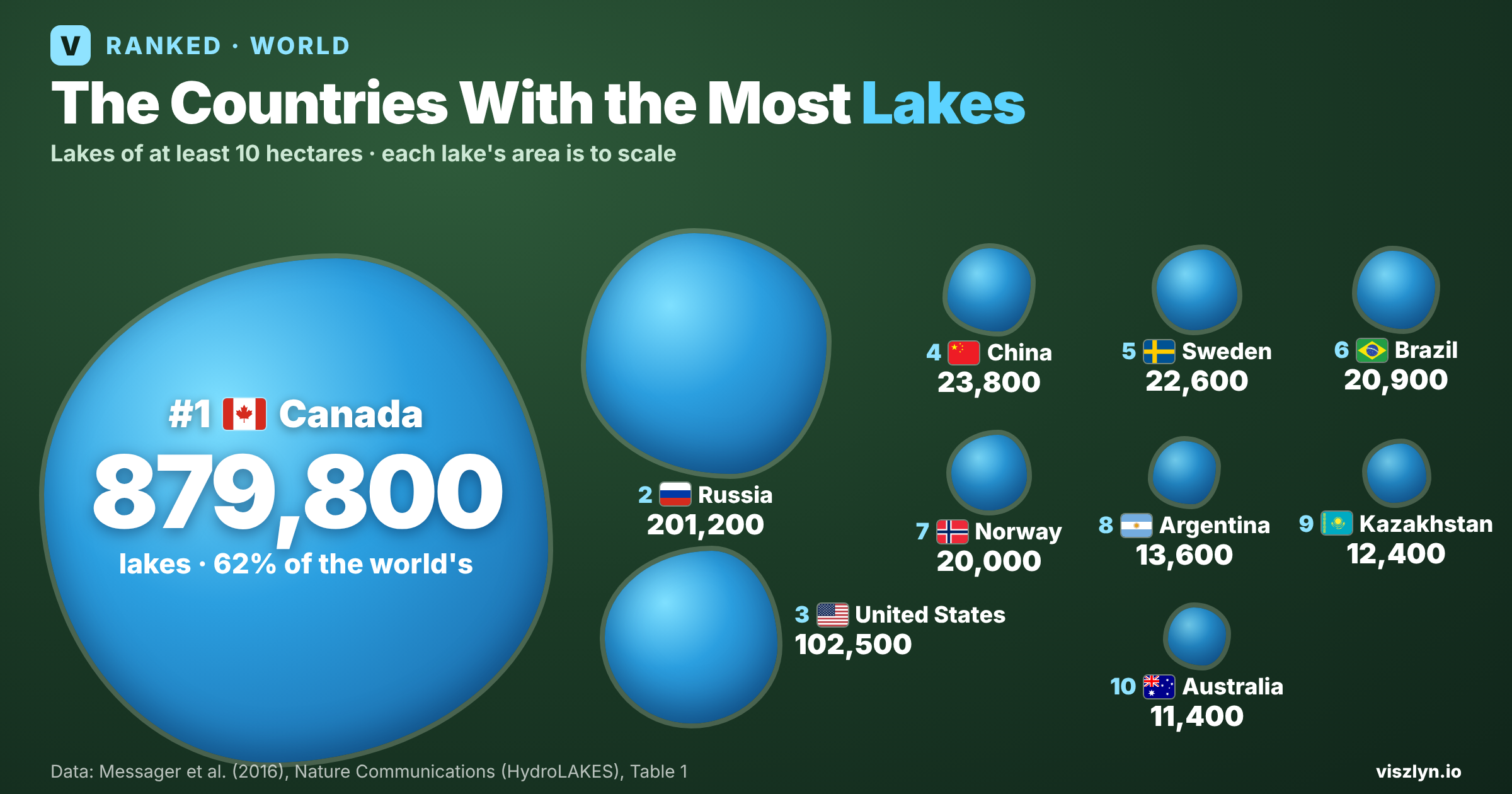
Canada is home to roughly 62% of the world's lakes larger than 10 hectares, more than every other country combined. Here are the 10 countries with the most lakes, from the global HydroLAKES study.
Quick Answer
Canada has the most lakes in the world: about 879,800 lakes of at least 10 hectares (0.1 km²), according to the HydroLAKES study by McGill University researchers. McGill University puts that at about 62% of the world's total; the study counted more than 1.4 million lakes of that size worldwide. Russia is second with about 201,200 and the United States third with about 102,500.
This ranking comes from HydroLAKES, a global inventory of lakes and reservoirs of at least 10 hectares (0.1 km², about 14 soccer fields), built by researchers at McGill University and published in Nature Communications in 2016. It counted more than 1.4 million such lakes worldwide. The study's own table of the countries with the most lakes gives counts to the nearest hundred and the total area of each country's lakes. Lakes on a border are assigned to the country where they drain out. Smaller ponds are not counted, so the true number of water bodies in each country is much higher.
Why Canada has so many lakes
Many of Canada's lakes occupy basins shaped by past glaciation, across the Canadian Shield and the north. Glaciation also shaped many of the lakes in Russia, Sweden, Norway and the northern United States. You may see a lower figure, 863,550, quoted for Canada. That is an input-map count: the number of lake outlines taken from Natural Resources Canada's map data while HydroLAKES was being built. It is not an alternative count of Canada's lakes; the study's final inventory gives about 879,800.
Number of lakes of at least 10 hectares
Source: Messager et al. (2016), Nature Communications 7:13603, Table 1Tap any country to jump to its details below.
Ranked #10 to #1
- Lakes of 10+ hectares:
- 11,400 lakes
- Category:
- Oceania
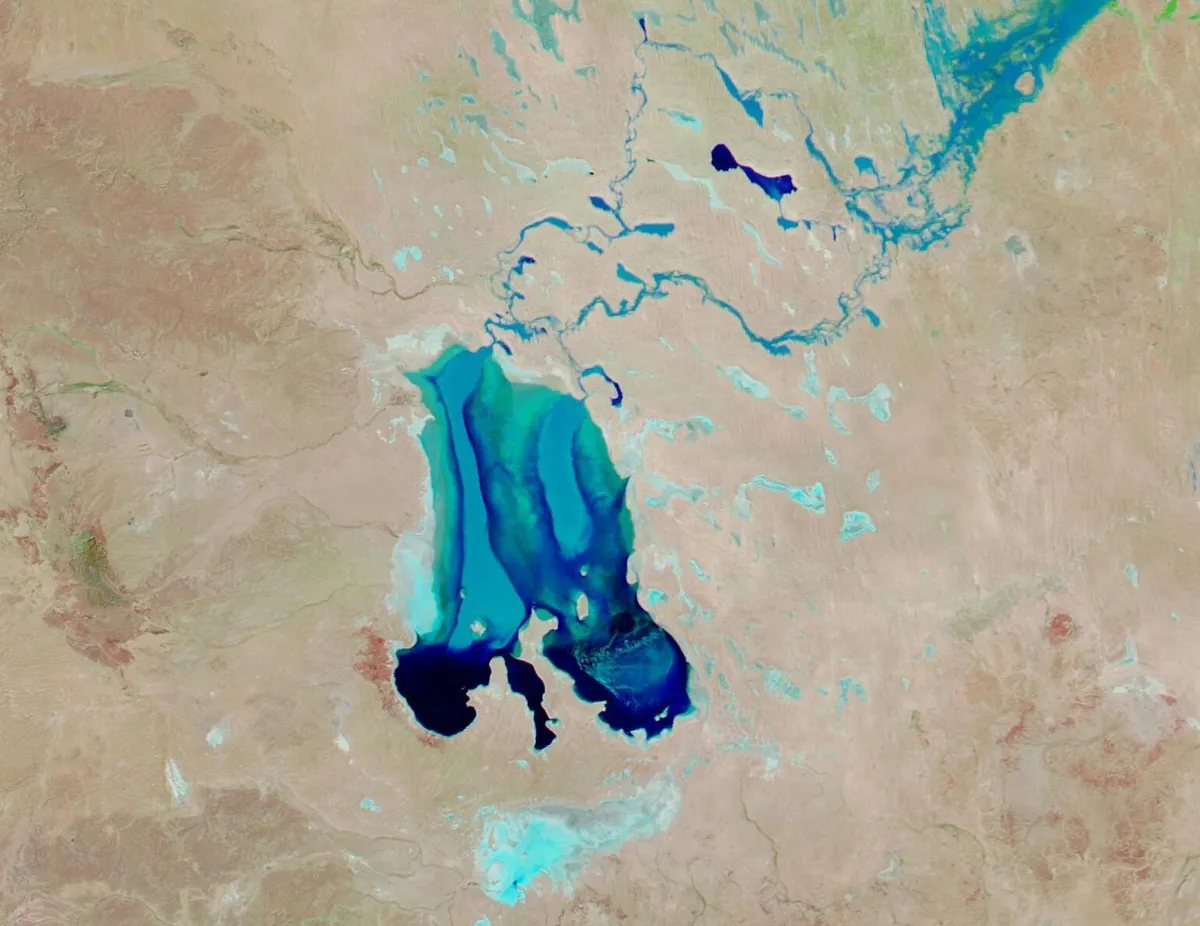
Australia has about 11,400 lakes of at least 10 hectares, covering 49,500 km² in total.
Many of Australia's biggest lakes, such as Kati Thanda–Lake Eyre, are salt lakes that are dry most of the time and fill only after heavy rain.
Source: Messager et al. (2016), Nature Communications, Table 1
- Lakes of 10+ hectares:
- 12,400 lakes
- Category:
- Asia
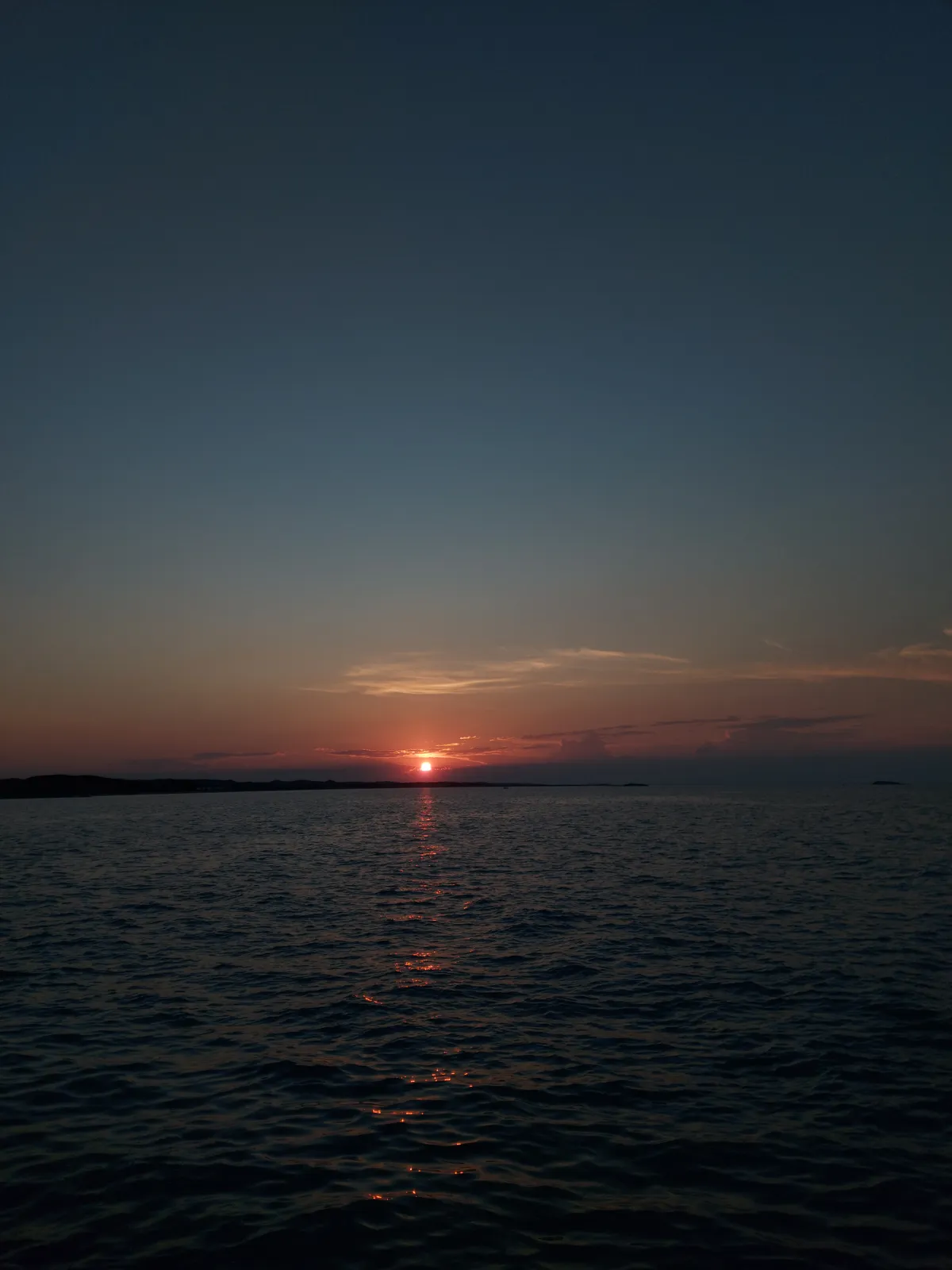
Kazakhstan has about 12,400 lakes of at least 10 hectares, covering 61,900 km².
Its lakes cover a larger total area than China's 23,800 or Sweden's 22,600, despite there being only about half as many.
Source: Messager et al. (2016), Nature Communications, Table 1
- Lakes of 10+ hectares:
- 13,600 lakes
- Category:
- Americas
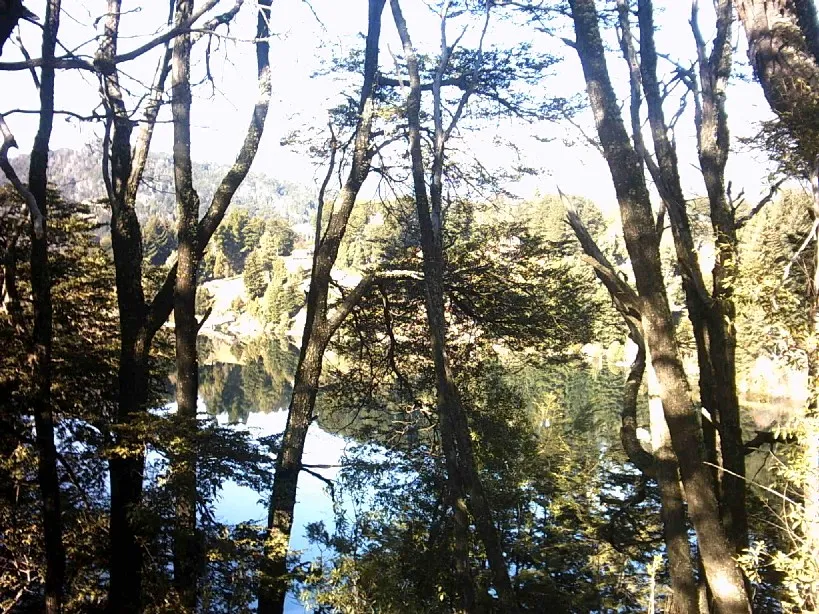
Argentina has about 13,600 lakes of at least 10 hectares, covering 27,900 km².
It is one of only two South American countries in the top 10, with Brazil.
Source: Messager et al. (2016), Nature Communications, Table 1
- Lakes of 10+ hectares:
- 20,000 lakes
- Category:
- Europe
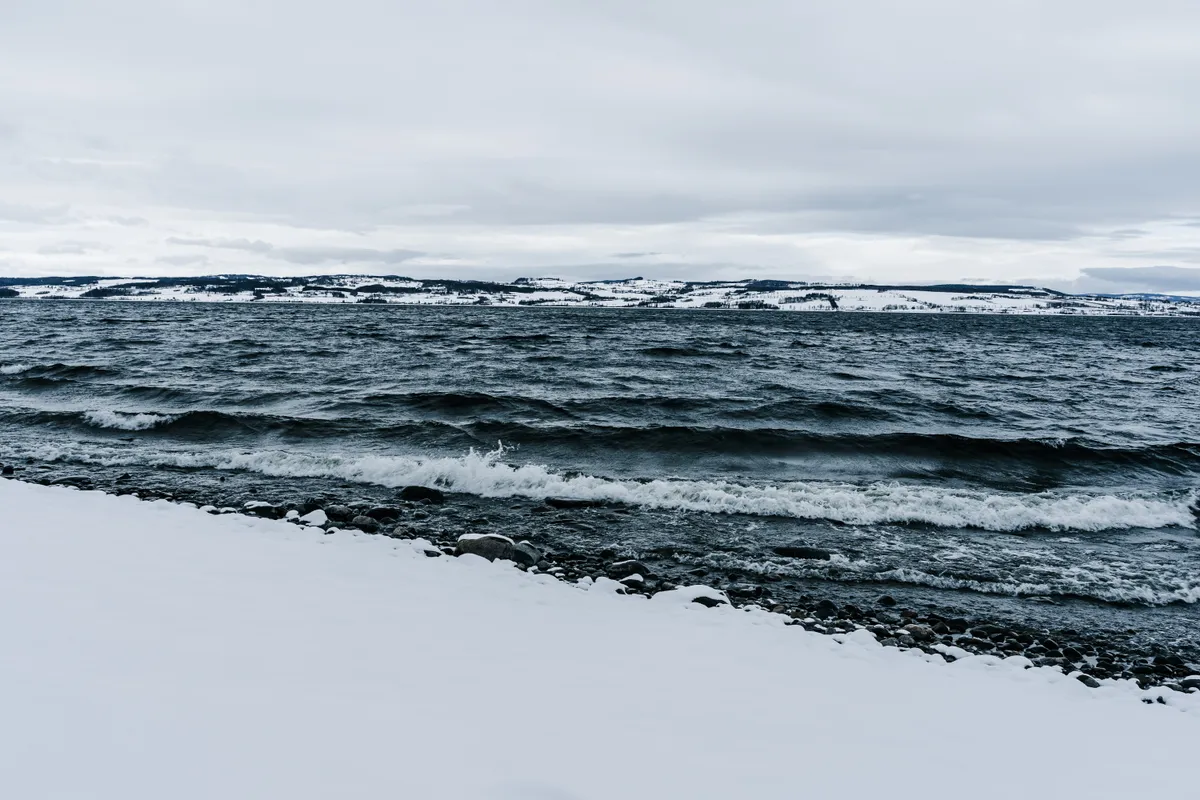
Norway has about 20,000 lakes of at least 10 hectares, covering 13,900 km².
Together, Sweden and Norway have about 42,600 lakes, more than China and almost twice as many as Brazil.
Source: Messager et al. (2016), Nature Communications, Table 1
- Lakes of 10+ hectares:
- 20,900 lakes
- Category:
- Americas
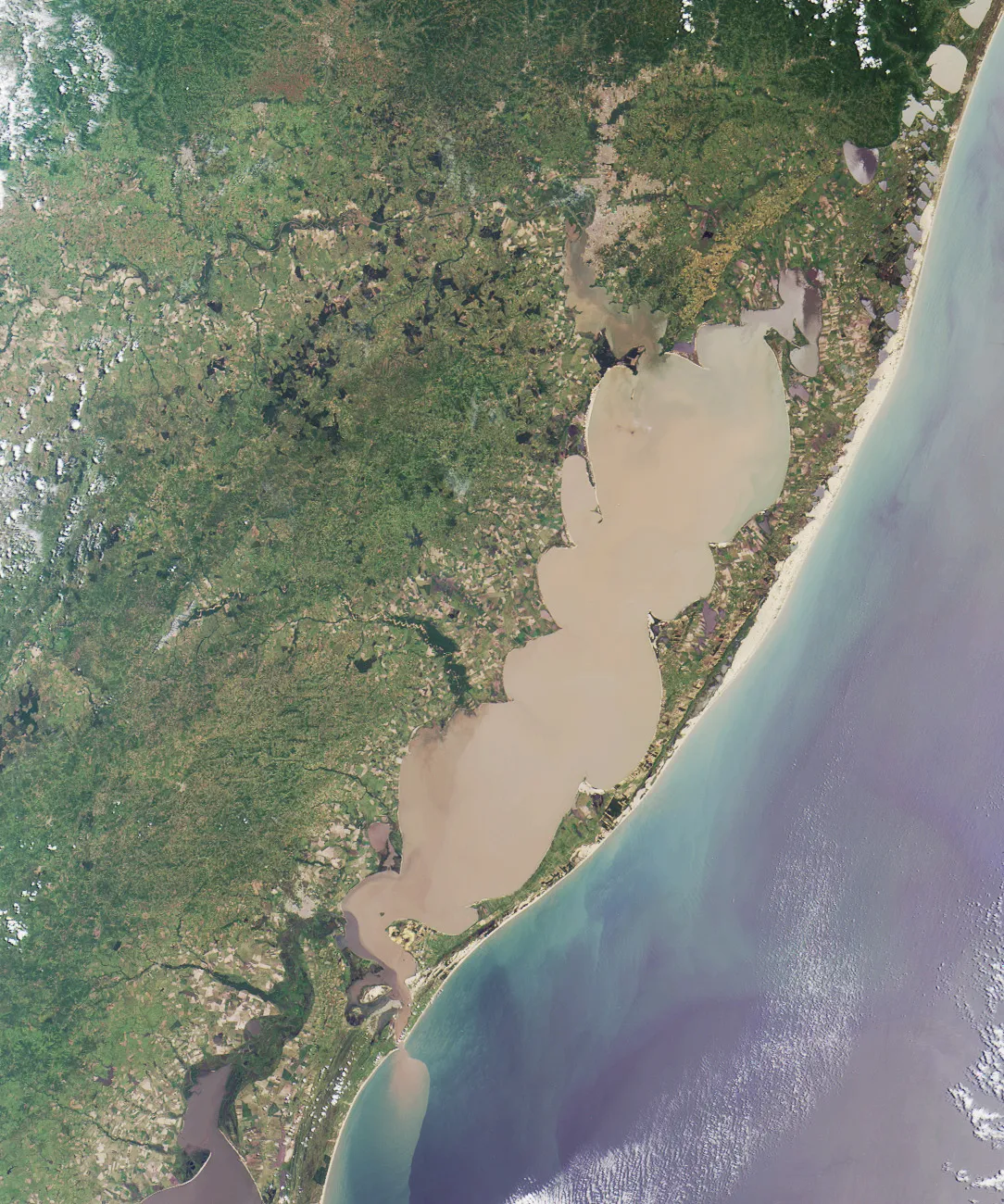
Brazil has about 20,900 lakes of at least 10 hectares, covering 31,400 km².
It has more lakes than any other Latin American country.
Source: Messager et al. (2016), Nature Communications, Table 1
- Lakes of 10+ hectares:
- 22,600 lakes
- Category:
- Europe
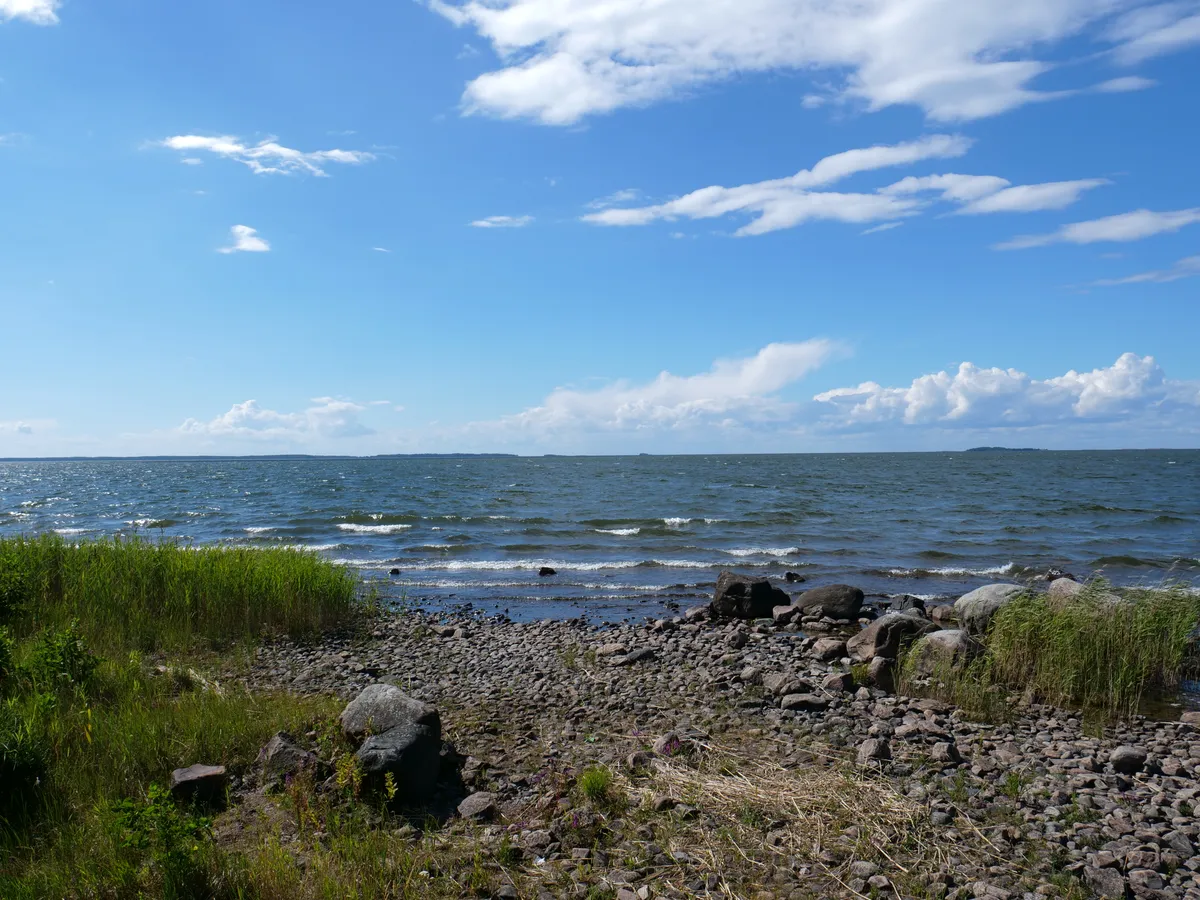
Sweden has about 22,600 lakes of at least 10 hectares, covering 34,300 km², the most among countries in the European Union.
Its largest lake, Vänern, is also the largest lake in the European Union.
Source: Messager et al. (2016), Nature Communications, Table 1
- Lakes of 10+ hectares:
- 23,800 lakes
- Category:
- Asia
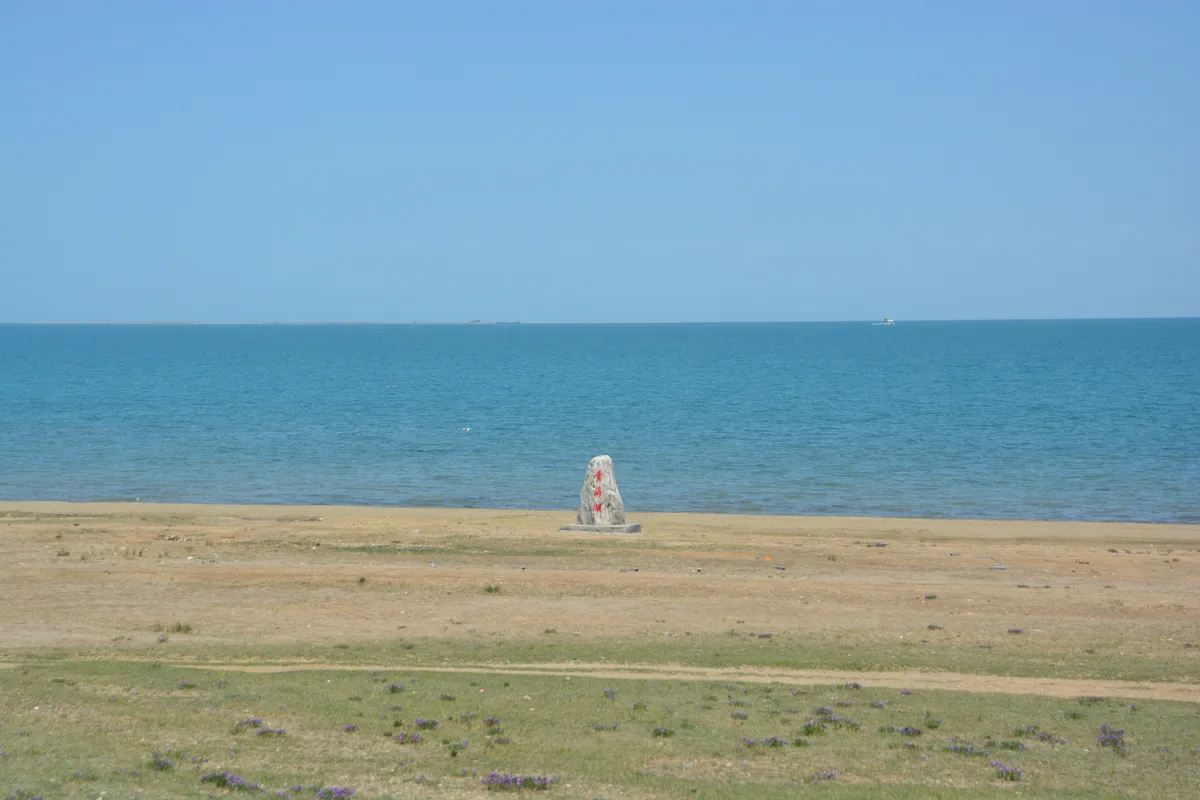
China has about 23,800 lakes of at least 10 hectares, covering 81,000 km².
Its lakes cover the fourth-largest total area in this ranking, after Canada, Russia and the United States.
Source: Messager et al. (2016), Nature Communications, Table 1
- Lakes of 10+ hectares:
- 102,500 lakes
- Category:
- Americas
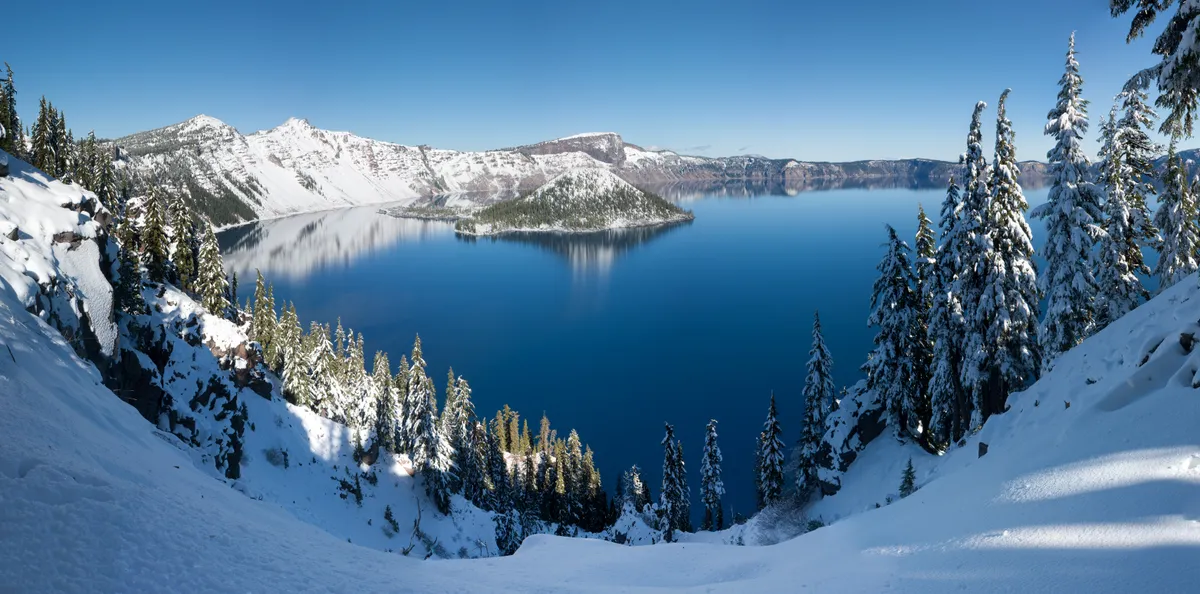
The United States has about 102,500 lakes of at least 10 hectares, covering 340,300 km².
Russia has almost twice as many lakes as the US, and Canada more than eight times as many.
Source: Messager et al. (2016), Nature Communications, Table 1
- Lakes of 10+ hectares:
- 201,200 lakes
- Category:
- Europe / Asia
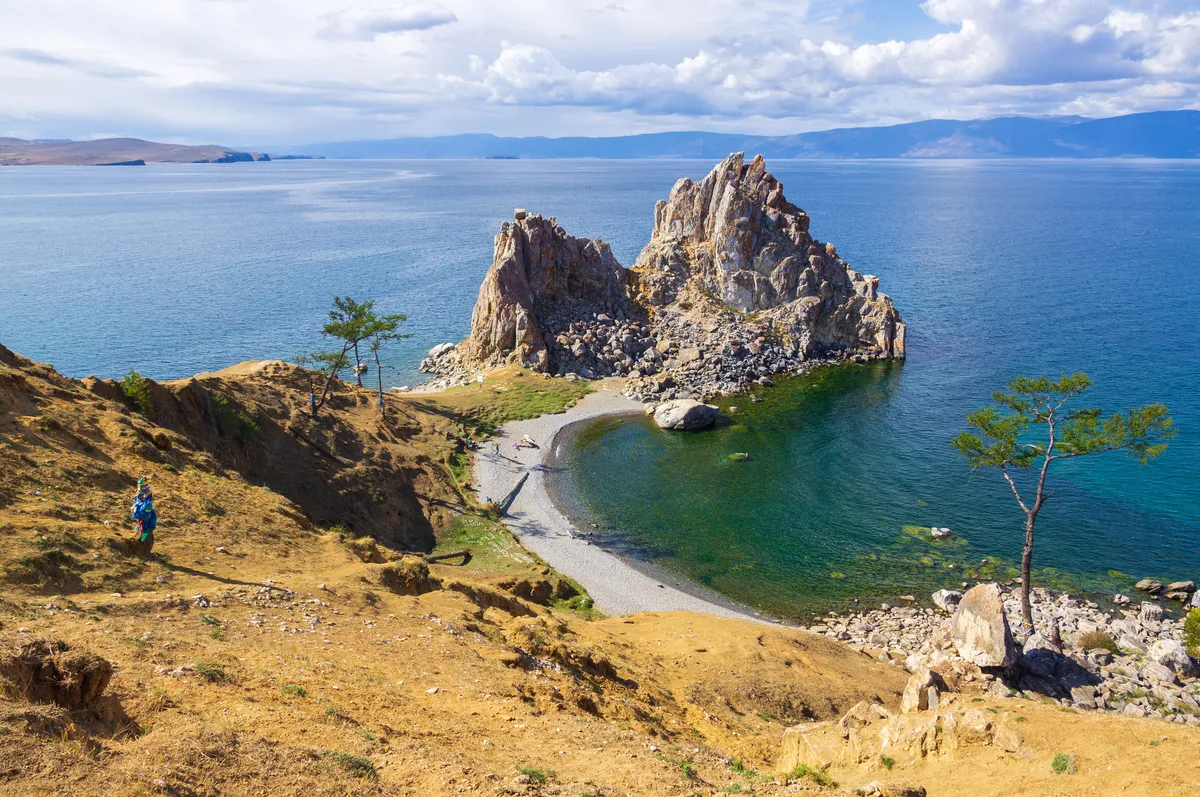
Russia has about 201,200 lakes of at least 10 hectares, covering 667,400 km².
Despite being the world's largest country, Russia has fewer than a quarter as many lakes as Canada.
Source: Messager et al. (2016), Nature Communications, Table 1
- Lakes of 10+ hectares:
- 879,800 lakes
- Category:
- Americas
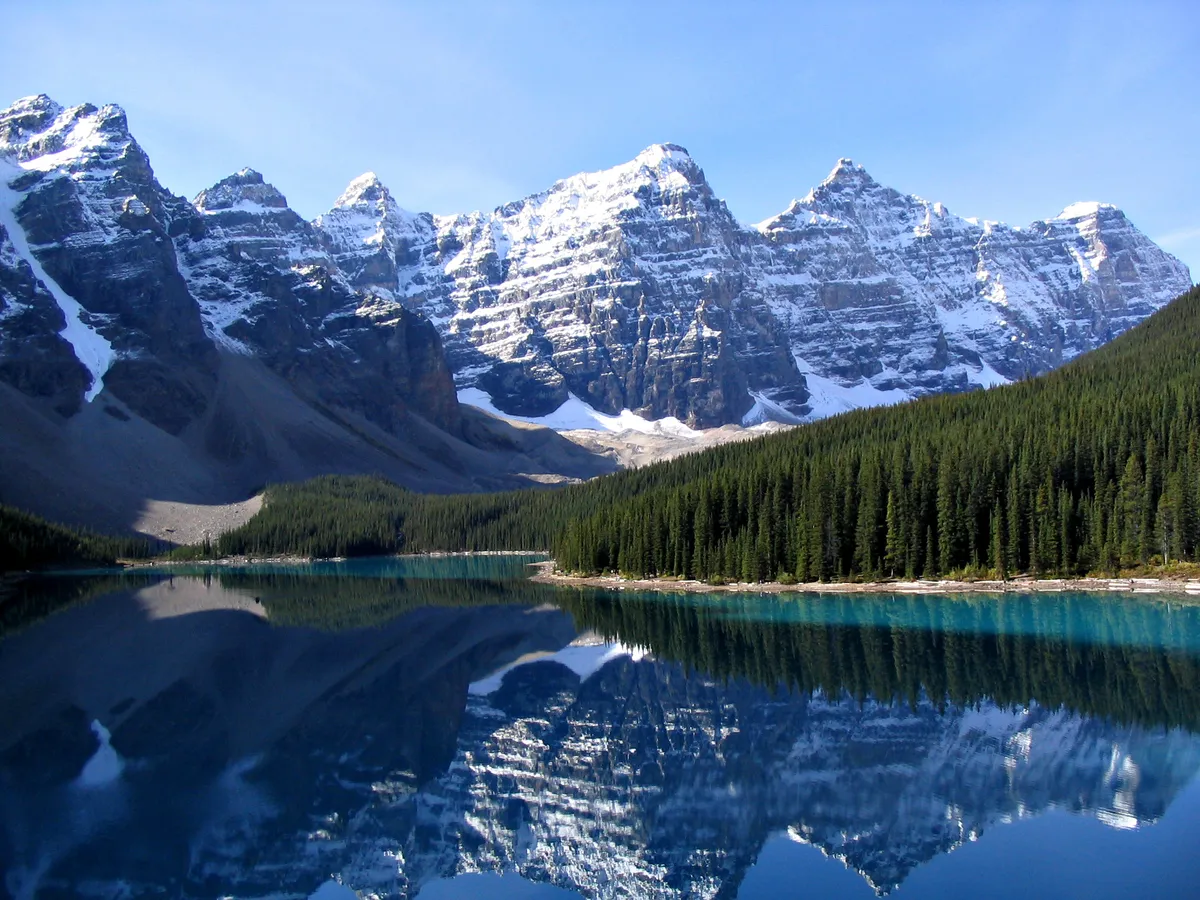
Canada has about 879,800 lakes of at least 10 hectares, covering 856,500 km², according to the HydroLAKES study.
That is about 62% of the world's lakes of that size, more than all other countries combined, and about 4.4 times as many as Russia in second place.
Source: Messager et al. (2016), Nature Communications, Table 1
What the numbers tell us
Canada's count is 451,400 higher than the next nine countries combined (428,400). Worldwide, the study counted more than 1.4 million lakes of at least 10 hectares.
- Data period:
- HydroLAKES v1.0 global lake inventory
- Last updated:
- November 16, 2026
- Sources:
- Messager, M. L., Lehner, B., Grill, G., Nedeva, I. and Schmitt, O. (2016), "Estimating the volume and age of water stored in global lakes using a geo-statistical approach", Nature Communications 7:13603, Table 1 ("Countries with most lakes"); McGill University news release, "Taking stock of the world's lakes" (December 2016).
Counts and total lake areas are as published in Table 1 of the study, which gives them in thousands to one decimal place (Canada 879.8 thousand); we show them as whole numbers (879,800). Only lakes and reservoirs of at least 10 hectares (0.1 km²) are counted. Lakes crossing a border are assigned to the country of their outlet. Canada's 62% share and the world total of more than 1.4 million lakes are from McGill University's release; the other comparisons are calculated by Viszlyn from Table 1. The ice-age explanation and the facts about individual lakes (Kati Thanda–Lake Eyre, Vänern) are general geography, not from the study.
Figures marked as estimates are based on publicly available information and may vary from other published sources.
Frequently Asked Questions
Canada, with about 879,800 lakes of at least 10 hectares, roughly 62% of the world's total, according to the HydroLAKES study. That is more lakes than every other country combined.