The 10 Countries With the Most Satellites in Orbit
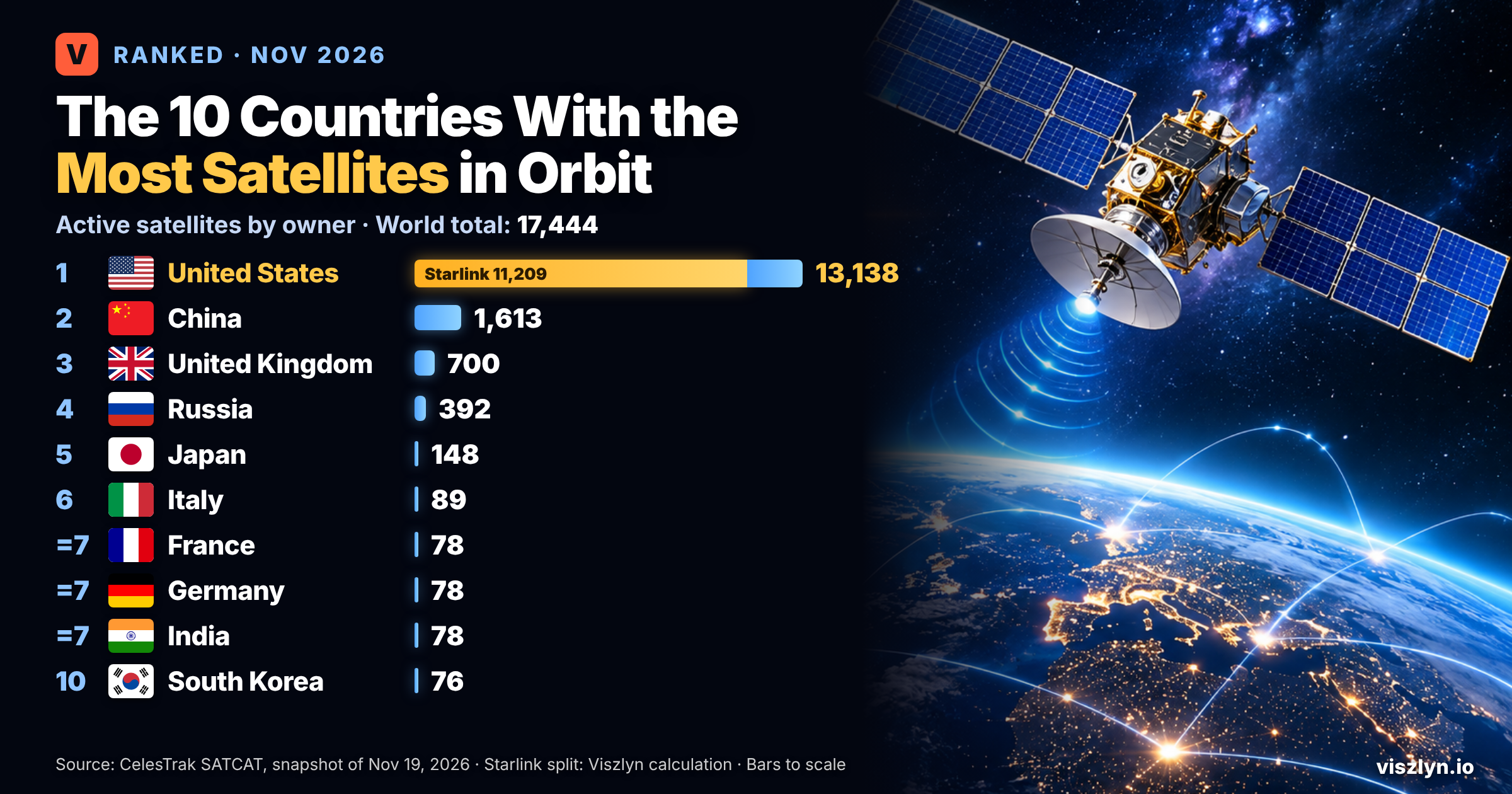
Three of every four active satellites in orbit are American, and most of those belong to a single company. Here are the 10 countries with the most satellites, counted from CelesTrak's catalogue of everything in Earth orbit.
Quick Answer
The United States has the most satellites in orbit: 13,138 active satellites, about 75% of the world total of 17,444, according to CelesTrak's SATCAT catalogue as of November 19, 2026. Most of them, 11,209, are SpaceX's Starlink satellites. China is second with 1,613 and the United Kingdom third with 700, of which 651 are OneWeb satellites.
This ranking counts active satellites in Earth orbit by owner country, using CelesTrak's SATCAT, the public catalogue of man-made objects in space maintained by Dr T. S. Kelso, in a snapshot downloaded on November 19, 2026. A satellite counts as active if it is a payload still in Earth orbit with an operational status of operational, partially operational, backup, spare or extended mission. Rocket bodies, debris and dead satellites are excluded. Each satellite is credited to the single owner CelesTrak assigns it, so multinational fleets such as the European Space Agency's are counted under their own codes, not split between countries.
Take away Starlink, and the US lead shrinks
SpaceX's Starlink constellation accounts for 11,209 of the United States' 13,138 active satellites, and 64.26% of all active satellites in the world (Viszlyn calculations). Without Starlink, the US total falls to 1,929, a share of 11.06%, although that would still rank first, ahead of China's 1,613. The pattern repeats in third place: 651 of the United Kingdom's 700 satellites are Eutelsat OneWeb's broadband constellation.
Active satellites in Earth orbit, by owner country
Source: CelesTrak SATCAT, snapshot of November 19, 2026Tap any country to jump to its details below.
Ranked #10 to #1
- Active satellites:
- 76 active satellites
- Category:
- Asia
South Korea takes the last place in the top 10 with 76 active satellites, just two behind the three countries tied above it.
Spain is next below the top 10, with 59 active satellites.
Source: CelesTrak SATCAT (November 19, 2026 snapshot)
- Active satellites:
- 78 active satellites
- Category:
- Asia
India is one of three countries tied on 78 active satellites, alongside France and Germany.
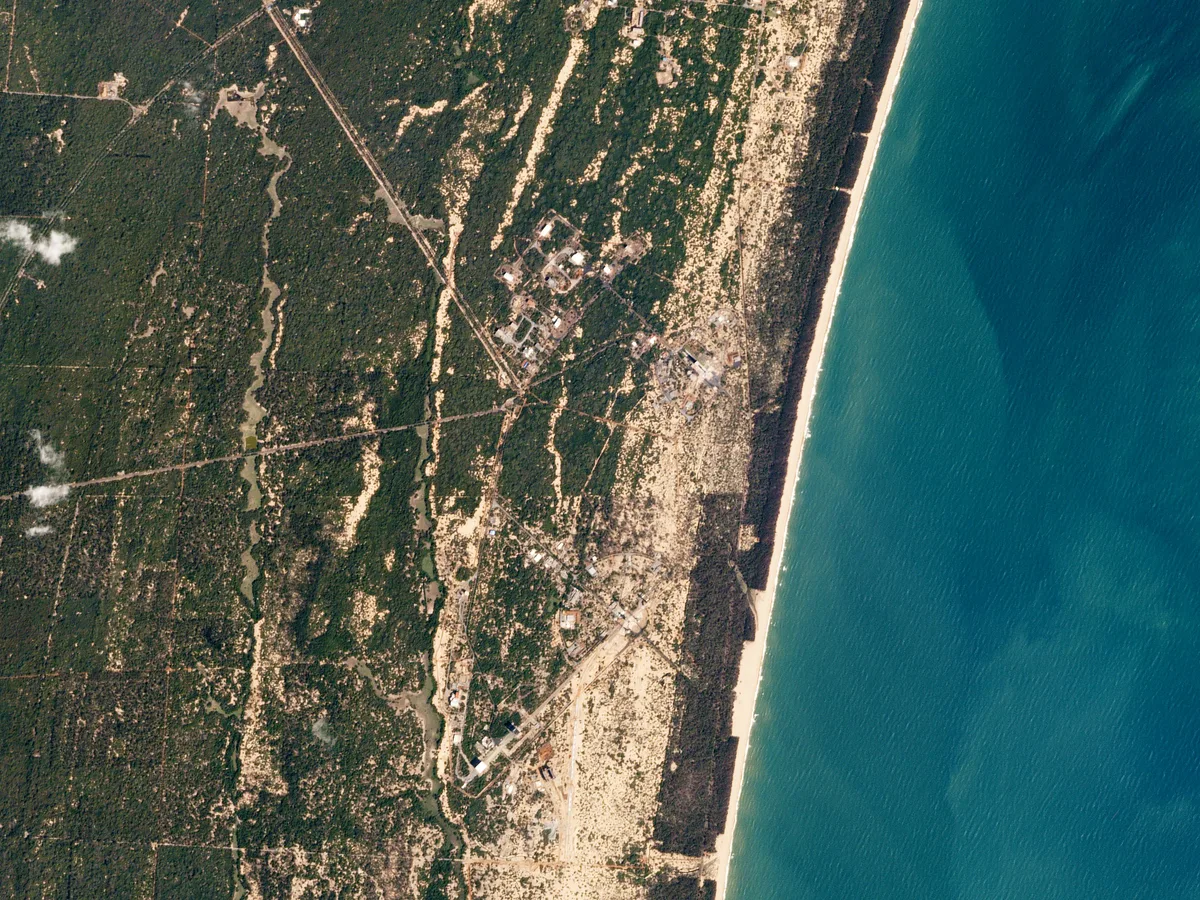
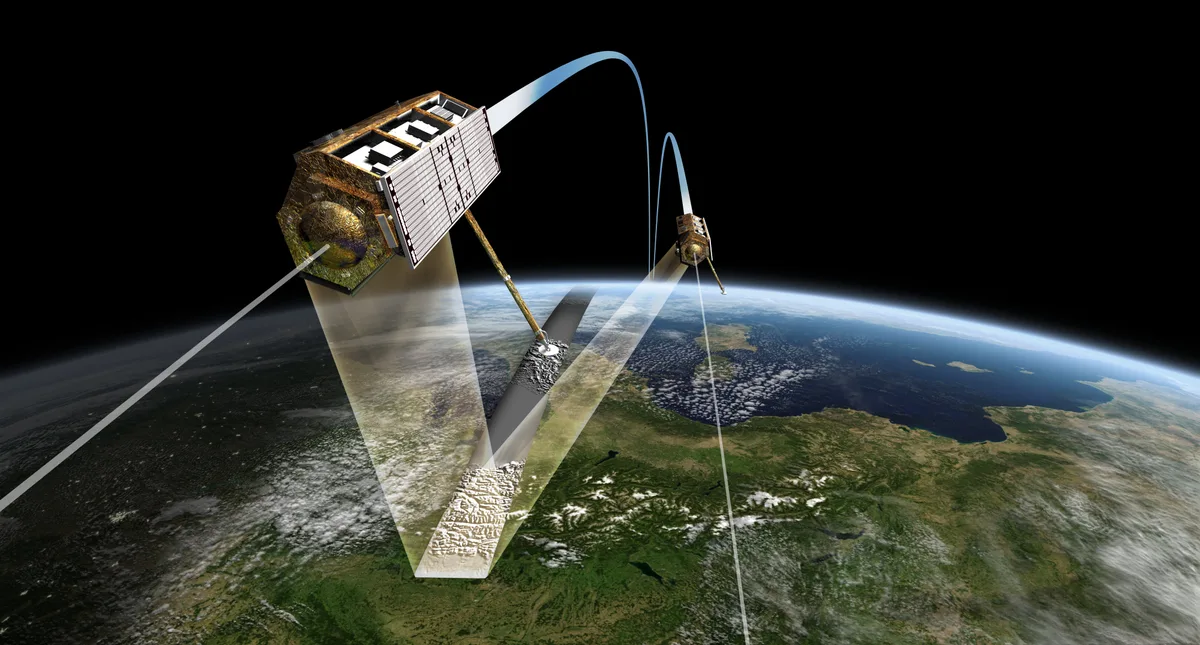
India's spaceport, the Satish Dhawan Space Centre at Sriharikota, is pictured here from orbit.
Source: CelesTrak SATCAT (November 19, 2026 snapshot)
- Active satellites:
- 78 active satellites
- Category:
- Europe
Germany is tied with France and India on 78 active satellites. Satellites owned by the European Space Agency are not included in Germany's total: they sit under ESA's own owner code.
ESA itself has 69 active satellites under its own code, only nine fewer than Germany's national total.
Source: CelesTrak SATCAT (November 19, 2026 snapshot)
- Active satellites:
- 78 active satellites
- Category:
- Europe
France is tied with Germany and India on 78 active satellites. Some French-linked fleets sit outside the French total, because multinational operators are catalogued under their own codes.
Eutelsat, headquartered in Paris, has 28 active satellites catalogued under the multinational EUTE code rather than France.
Source: CelesTrak SATCAT (November 19, 2026 snapshot)
- Active satellites:
- 89 active satellites
- Category:
- Europe
Italy ranks sixth with 89 active satellites, ahead of the three countries tied on 78.
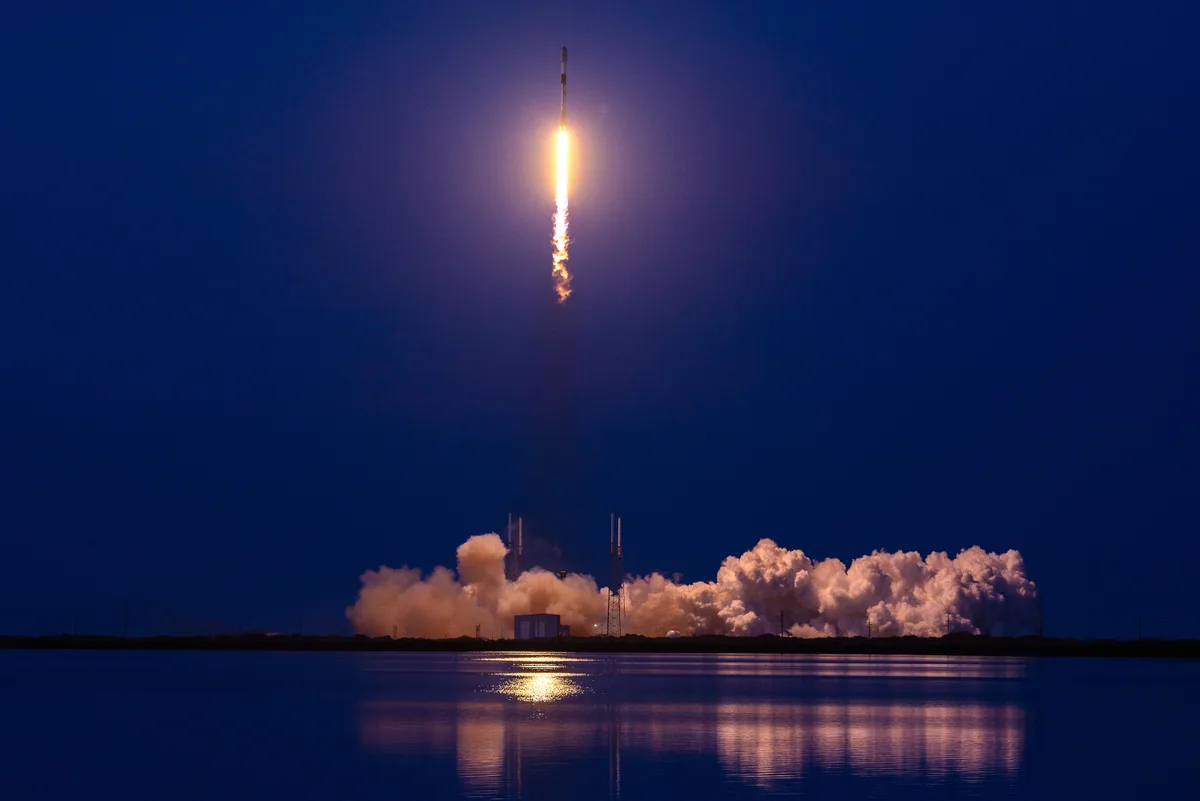
Italy's COSMO-SkyMed Earth-observation satellites watch the planet day and night; one of its second-generation satellites is pictured launching here.
Source: CelesTrak SATCAT (November 19, 2026 snapshot)
- Active satellites:
- 148 active satellites
- Category:
- Asia
Japan ranks fifth with 148 active satellites, the largest fleet in Asia after China's.
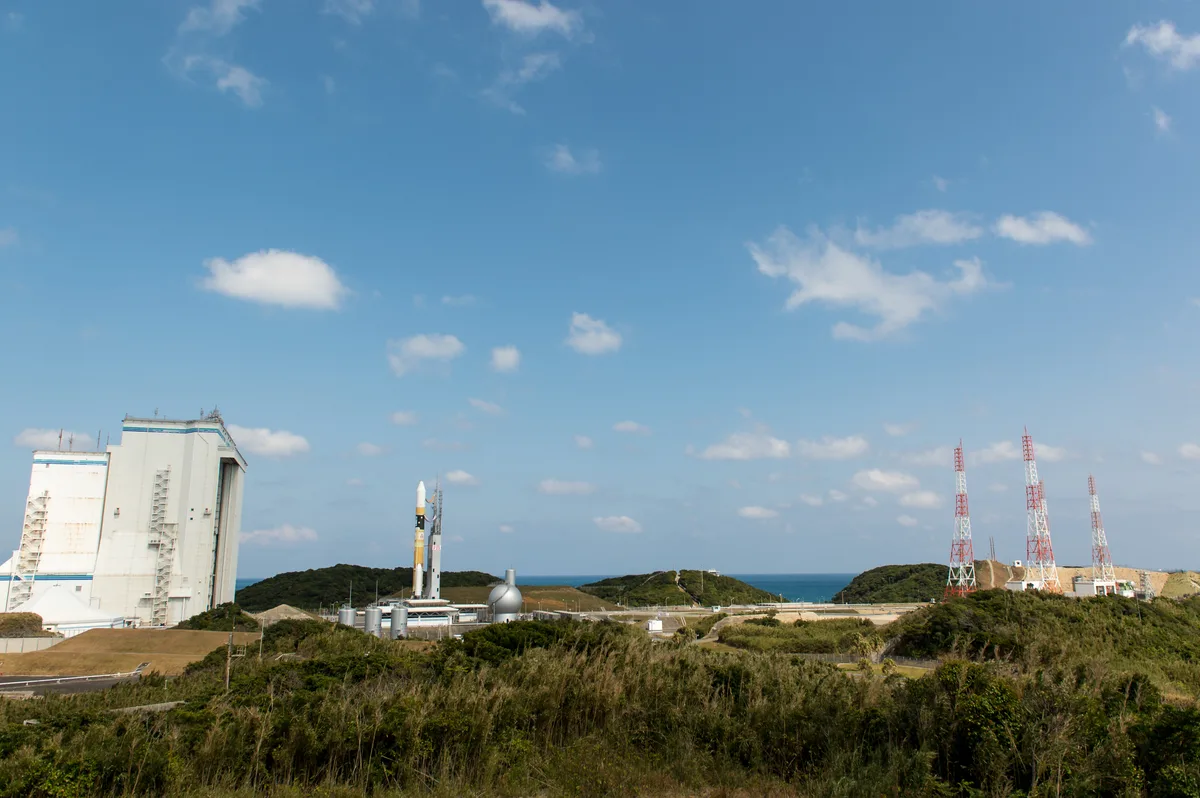
Japan's QZSS positioning system, known as Michibiki, has operated as a four-satellite constellation since November 2018 and is being expanded into a seven-satellite constellation.
Source: CelesTrak SATCAT (November 19, 2026 snapshot)
- Active satellites:
- 392 active satellites
- Category:
- Europe / Asia
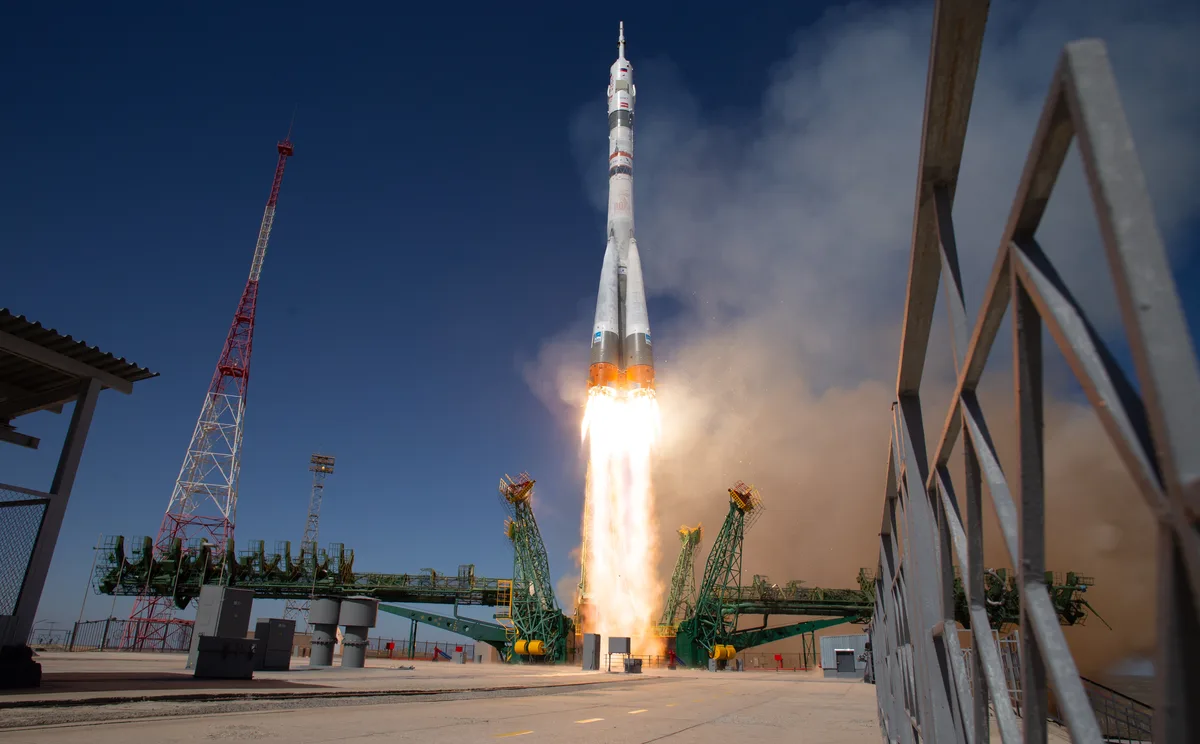
Russia ranks fourth with 392 active satellites, counted on the same method as every other country in this ranking.
CelesTrak has no owner code for Russia itself: Russian satellites are filed under CIS, which technically means the former USSR but in practice covers only Russian satellites, since Ukraine and Kazakhstan have their own codes.
Source: CelesTrak SATCAT (November 19, 2026 snapshot)

- Active satellites:
- 700 active satellites
- Category:
- Europe
The United Kingdom ranks third with 700 active satellites, and the ranking is mostly one company's story: 651 of the 700 are Eutelsat OneWeb's broadband satellites, which CelesTrak catalogues under the UK.
Under the OneWeb–Eutelsat merger announced in July 2022, OneWeb's headquarters remain in the UK, and the UK government retains a special share in the company.
Source: CelesTrak SATCAT (November 19, 2026 snapshot)
- Active satellites:
- 1,613 active satellites
- Category:
- Asia
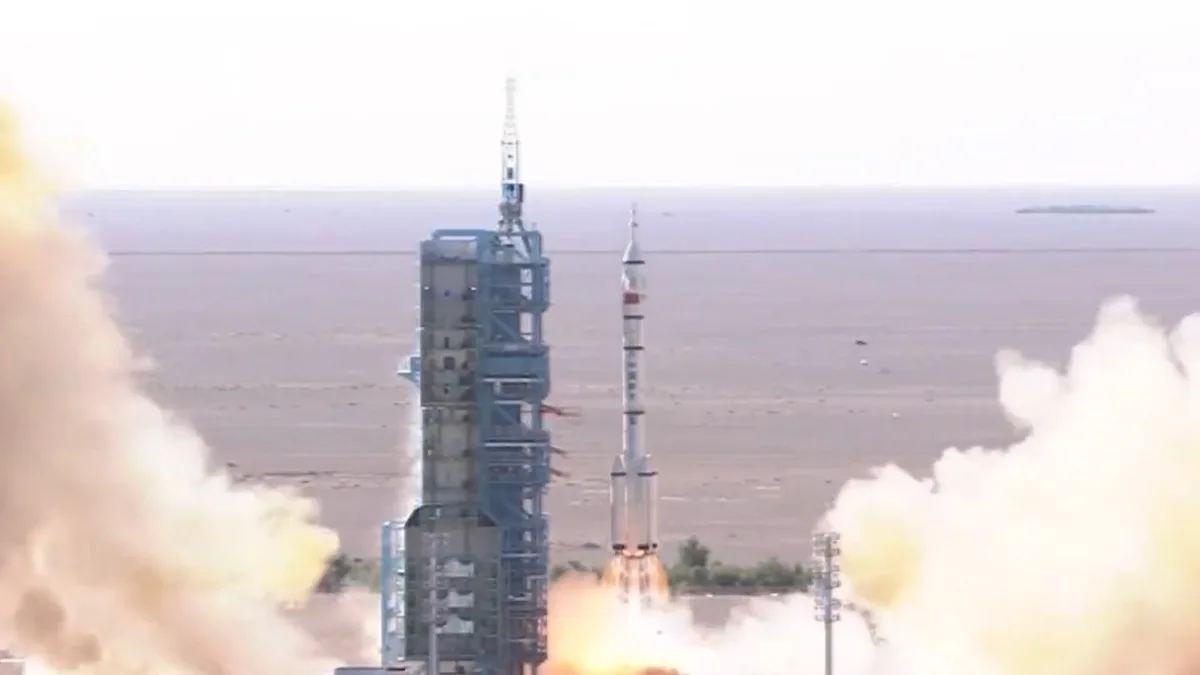
China ranks second with 1,613 active satellites, roughly one for every eight satellites owned by the United States.
China completed its BeiDou global navigation constellation in June 2020; its third-generation system, BDS-3, has 30 satellites across three kinds of orbit.
Source: CelesTrak SATCAT (November 19, 2026 snapshot)
- Active satellites:
- 13,138 active satellites
- Category:
- Americas
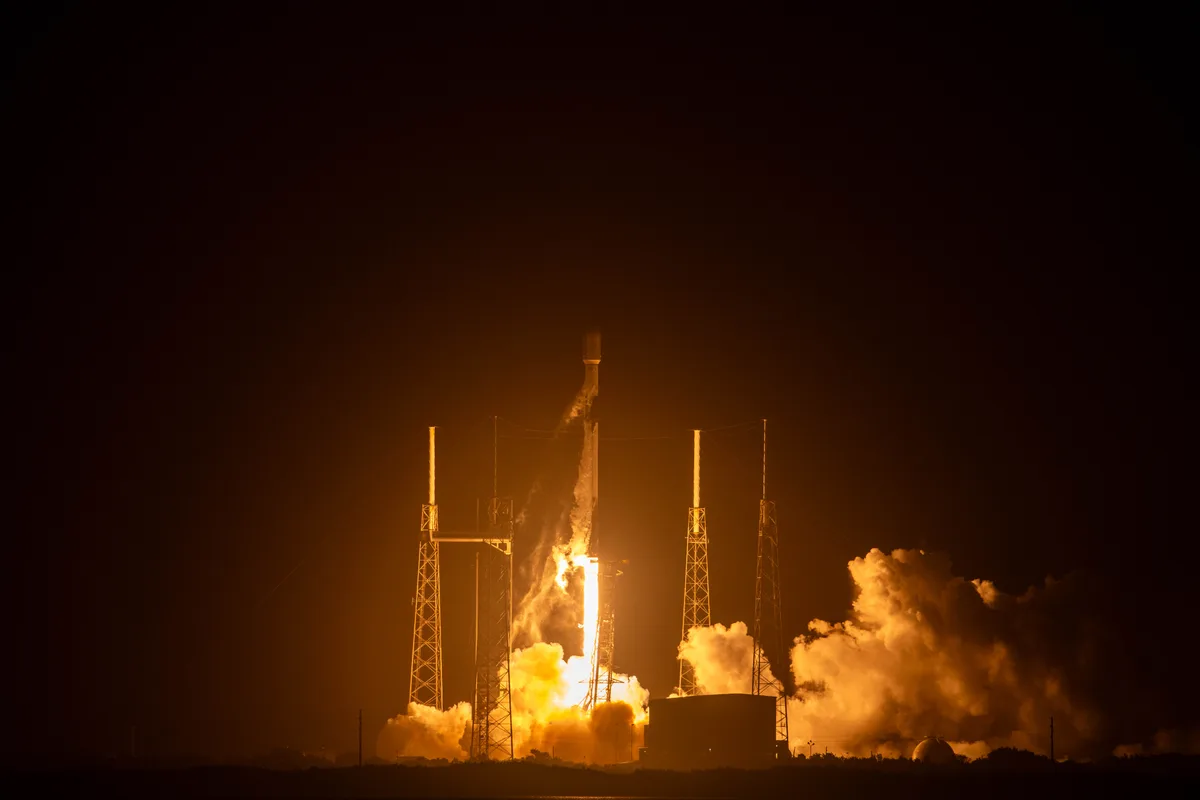
The United States has 13,138 active satellites, more than four times as many as the other nine countries in this ranking combined (Viszlyn calculation).
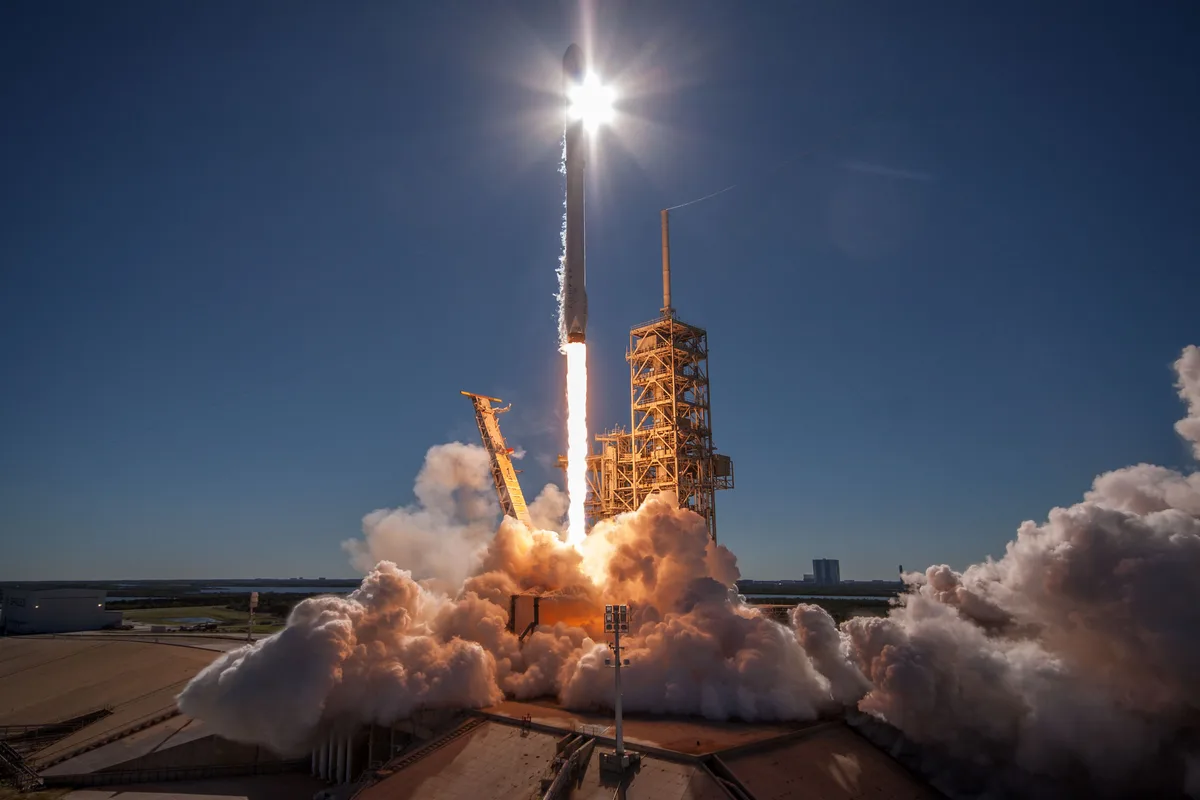
On October 19, 2025, a SpaceX Falcon 9 launch from Vandenberg carried the 10,000th Starlink satellite to reach orbit; it was also SpaceX's 132nd Falcon 9 launch of 2025, tying its own annual record.
Source: CelesTrak SATCAT (November 19, 2026 snapshot)
What the numbers tell us
The US total is 75.32% of the world's 17,444 active satellites. Excluding Starlink, the US would have 1,929 satellites and an 11.06% share, and would still rank first, ahead of China's 1,613. All shares are Viszlyn calculations from the CelesTrak SATCAT snapshot of November 19, 2026.
- Data period:
- CelesTrak SATCAT snapshot of November 19, 2026
- Last updated:
- November 20, 2026
- Sources:
- CelesTrak SATCAT (Dr T. S. Kelso), full satellite catalogue downloaded November 19, 2026, with CelesTrak's SATCAT owner codes and format documentation. Country facts: Space.com (10,000th Starlink launch); Xinhua via the State Council Information Office (BeiDou); GOV.UK (OneWeb); Cabinet Office of Japan (QZSS).
We counted payloads in the CelesTrak SATCAT snapshot of November 19, 2026 that are still in Earth orbit and carry an operational status code of + (operational), P (partially operational), B (backup/standby), S (spare) or X (extended mission). Rocket bodies, debris and non-operational satellites are excluded, as are payloads orbiting bodies other than Earth. CelesTrak assigns each satellite a single owner code: multinational organisations keep their own codes and are never split between member countries, so the European Space Agency's 69 active satellites appear under ESA rather than France, Germany or Italy, and ESA would rank 12th if owner codes were ranked alongside countries. CelesTrak has no owner code for Russia itself; Russian satellites sit under the code CIS, which technically means former USSR but in practice covers only Russian satellites, since Ukraine and Kazakhstan have their own codes. Russia's count is 392 on this counting method. Percentages and other derived figures are calculated by Viszlyn from the snapshot. The UCS Satellite Database was not used: it was last updated on May 1, 2023, and its updates are paused.
Figures marked as estimates are based on publicly available information and may vary from other published sources.
Frequently Asked Questions
The United States, with 13,138 active satellites as of November 19, 2026, about 75% of the world total of 17,444 (CelesTrak SATCAT; share calculated by Viszlyn). China is second with 1,613.